


What would you do if you had lots of saba bananas at home? Well, aside from eating them raw or boiled, you would most likely make turon (sliced bananas rolled in lumpia wrapper and fried to a golden crisp), banana cue (fried peeled bananas with caramelized sugar and skewered in barbecue sticks), maruya (sliced or mashed bananas with flour and cornstarch batter fried into fritters), and/or minatamis na saging (saba slices cooked in sugar and water, and is enjoyed with crushed ice and milk as Iced Saba, or included as one of the ingredients in Halo-halo or Saba con Yelo).
But there are two regional saba treats that you can learn to make and enjoy for a change. One is Bicol’s Pinakrong Saba, and the other is Mindanao’s Ginanggang.
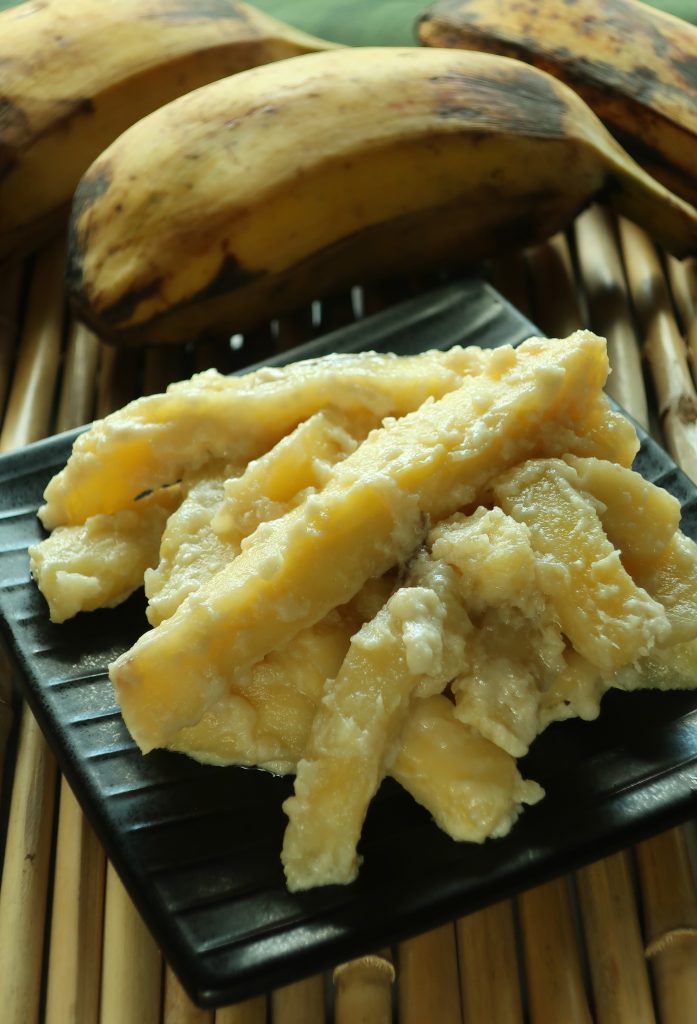
Pinakrong Saba, which I made at home several times following a simple recipe by former Junior Master Chefs finalist Louise Mabulo, is simply saba bananas cooked in gata (coconut milk) with a little salt. Just cut each peeled saba into four or six sticks, place in a pot with coconut milk to cover, sprinkle with a little salt, and cook until it renders fat. The result is a rich and creamy dessert that everyone who loves Bicolano food would surely enjoy eating.
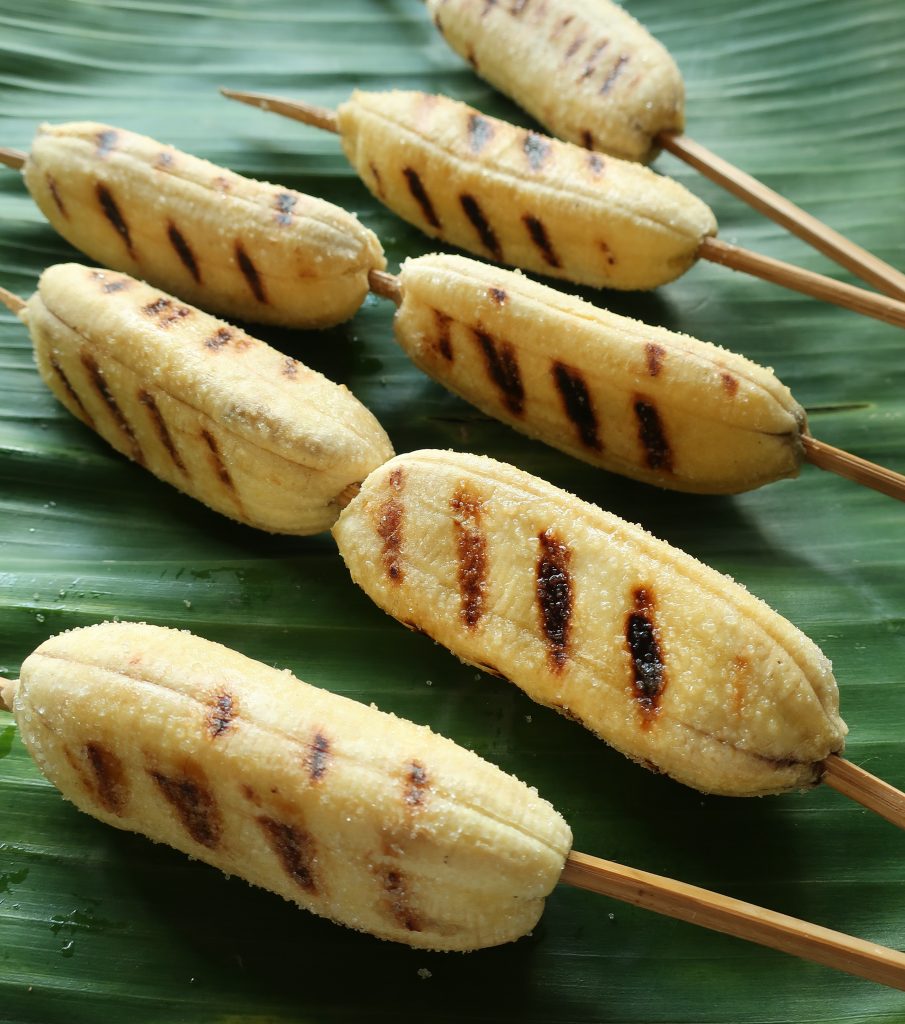
Ginanggang, which originates from and is largely enjoyed in Mindanao, is grilled saba bananas brushed with butter or margarine and sprinkled with sugar. The banana is peeled, skewered in a barbecue stick, and grilled until the surface is lightly charred. Taken off the grill, it is brushed with butter and then sprinkled or lightly rolled in white sugar. Similar to yet at the same time different from the banana cue in many ways, ginanggang is definitely a lighter snack than its more familiar “relative.”
Ready to try the two new saba meriendas?